Posts Tagged ‘businesses’
In the digital world we live in today, social media is growing rapidly in both popularity with people and in the business world. Social media acts a gateway between the business world and a vast amount of people around the world, and more social media websites are being created.
One social media platform that stands out currently was created by internet giant Google. Google+ came to our screens in 2011, so in retrospect a little late to the game compared to the likes of Facebook and Twitter. So is Google+ just another social networking website or does it hold value, particularly as a business tool?
In short, yes, I believe that Google+ does hold value for business, and you should use it to promote your business. Unlike other social media platforms Google+ has a decent range of tools that can be used to help your business. Here’s what it can be good for:
SEO – All social media websites can be good for your websites SEO/digital marketing campaign. Google+ is no exception as it can really help your websites performance using keywords, hyperlinks and engaging with people so they may visit your site.
Brand – Enforce your brands identity and get your message across by connecting with a mass audience using social media. Having your business logo, mantra or even slogan on social media can do wonders for your business as it be seen by millions.
Communication – Inbound and outbound, Google+ can be used as a brilliant communication tool to connect with vital people. You can use Google+ to connect with your potential clients and customers through updates, however you can also connect with people buy using Google+ as host to hold a video conference.
What’s Hot? – Google will display the latest trends on the internet. This could be a video that has gone viral or something as small as just a #tag that is trending. This can be such an effective tool to use as a business can really dive in a find relevant hot topics and communicate with their potential clients.
There are of course a longer list of uses and effective tools that Google+ can bring to your business. These are just some of the ones I personally prefer as I think that they are some of the most effective to use in business. It could be argued that Google+ may not be as big a social media heavyweight as Facebook, but really it can a really effective tool to promote your business.
Keep an eye out on Friday as Debbie will be going into further detail on how Google+ can benefit your business. Have you had a play with Google+? What did you think of it?
A very wise man once said “The only way to make sense out of change is to plunge into it, move with it, and join the dance.” (Alan Watts, British philosopher). How can this sentence apply to you? Do you accept change or do you fight it?
Arguably, one of the biggest changes we have seen in the business industry within the last few years is social media. Social media has been around for a fair while now but the importance of it crept up on us and it soon became a standardised service that marketers were offering. After understanding the importance of social media, more and more businesses slowly but surely started investing in it. However there are still a lot of business leaders that do not see the value of it and refuse to even look at it.
Nowadays there are so many social media platforms available that it almost becomes overwhelming for the user to know which to use. Could this be the reason business leaders are not keen to interest in social media? Too much choice? If that is the reason for you then here’s a quick summary of the main social media platforms that we use for ourselves and our clients.
– A good platform for consumer based clients. Using engaging techniques like posting tips or posting photos you can really interact with your audience and enforce your brand. Facebook can also be very effective for events as you can set up an Facebook event, send out invites and gain a following.
– This micro blogging website allows you to post updates (no bigger than a 140 characters) and retain an audience. Twitter is a brilliant platform to show off your expertise and start a conversation that could lead to work.
– LinkedIn is the host to a thriving business community from around the world. Depending on your business you can engage and interact with people in your local area. Through LinkedIn you can start discussions to a mass audience, share expertise and gain valuable advice through other members.
– YouTube is a video sharing website, you can upload, watch and share videos from all around the world. Videos can prove to be a vital part of business so uploading them to a site visited by millions of people a day can prove very effective.
This list goes on and on but these are some of the main social media platforms that we use. We are always looking at other social media platforms and keeping up to date with the new updates or new platforms. The ones listed – among others, have proven to be the most effective for us and our clients.
Remember that using social media does not mean posting updates about what you had for breakfast, or what you thought of the latest football scores. It’s a marketing tool that you can use to improve your relationship with your clients and show professionalism and expertise to potential clients. It is also another platform to use to get relevant people to visit to your website/get in contact with you and then convert them to a client/customer. So instead of battling with change, just accept it and join the dance.
For more information on social media or if you would like further tips on how to use it in business, send me an email. Does your business use social media? If so what social media websites does your business use and which ones are effective? Facebook? Twitter? LinkedIn?
A lot of the people we meet have taken the exciting (and often scary) decision to start their own business. In the past, news and statistics about the likelihood of survival of new businesses were always scary – I’ve read many stats stating that approximately 50 per cent of businesses fail in the first year. This number then increased dramatically in the first five years of running a business, when the number is claimed to rise as high as 90 to 95 per cent.
On a lighter note, I read a very positive article recently which claimed (with research to back it up) that these numbers are somewhat exaggerated, and are not an accurate reflection of today’s business survival chances. According to the latest research conducted by the Small Business Administration, about 66 per cent last past the first two years, leaving only a third of businesses that fail within these two years. After four years, the number of surviving businesses decreases to only 44 per cent, meaning that about 56 per cent of businesses fail at the five-year mark, a far cry from the 90 to 95 per cent previously claimed.
As encouraging as this is, it’s still a challenge to start and grow a new business successfully. There are ways and methods out there to help increase your chances of business success. Mentoring is one of the paths you could follow to help you.
Appletree offers Marketing Mentoring to start up and small business owners. With over 17 years experience in marketing, we have the practical experience and expertise to help our clients make the right choices for their business. Following a typical 12 month programme, we talk to our clients every month, discussing what works for their business, what doesn’t, and offering ideas on how to make the most of their marketing budget (however small). We get an understanding of what the client is trying to achieve, and tailor practical advice to help them achieve those objectives.
In order for your business to survive you need to promote it. Creating a marketing strategy and ongoing workable plan can seem such an onerous task that it is often avoided – at cost. Our mentoring service helps create the right marketing strategy, and we work alongside you to produce a plan that you can work to.
This is one of many low-cost, high impact methods to promote your business. It’s one that really works though.
Are you starting your own business? Have you considered tapping into a flexible, cost-effective marketing resource for your business? Visit our website to find out more about Appletree’s Marketing Mentoring.
Rainbows of Newbury is a lovely little craft shop (in Newbury, Berkshire.) It’s a treasure trove of all things crafty – things to cut out and stick down, or stick on, or paint or patchwork. One of the owners of Rainbows, Fiona, was telling me how she regularly moves things around inside the shop and the amazing effect it has. She can have something on display in a basket for months and not sell any. Then she moves the basket to a different position in the shop and people who have been coming in on a regular basis see the basket. “I didn’t know you sold these,” they tell her and they start to buy them!
Rainbows has only been open since the end of 2012 and already it’s building up a number of loyal customers who keep coming back. By moving things around inside the little shop, Fiona can encourage her customers to buy something they’ve not bought before, simply because they haven’t seen it. She told me how she assumed that because they’d been into the shop a few times, they knew what she was selling. But that’s not necessarily the case. Things get overlooked – especially in a shop that’s full of all sorts of lovely things to distract you! If Fiona’s customers know there will be different things to buy or try out the next time they visit, they’ll keep coming back.
You’ve probably heard the phrase ‘your website is your shop window’. It’s the online way of showing customers what you do and what they can buy from you. If they come once and don’t see what they’re looking for, you need to encourage them to come back another time. How do you keep them coming back? By moving things around. Try putting your ‘products’ in a different place in your ‘shop’. Find different ways of displaying them, to catch the eye of your visitors. Just like Fiona in her shop, you don’t actually have to give your customers something new to buy every time they visit – just think about different ways of displaying what you’re already selling. Add content that explains in more detail the benefits of your service. Put up a client testimonial or case study to show how other people use your service. Write a blog that will give people ideas on how they can use what you sell.
Treat your website like the shop window it is for your business and just like Rainbows, you’ll be able to create a loyal base of customers who keep coming back and keep buying from you.
If you want to know about Rainbows, you can find them at www.Facebook.com/RainbowsOfNewbury.
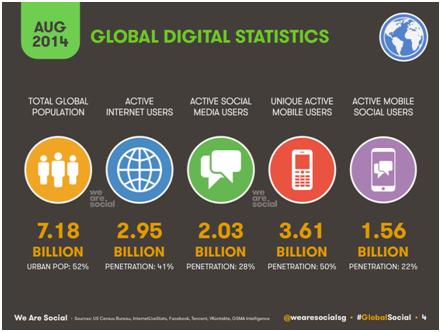
Latest stats just out on worldwide usage of social media gave some really interesting, and quite frankly scary figures. Have a read of the blog, but in the meantime here’s a snapshot of some of the sites we use for our clients on a regular basis, and how you can use them as a marketing tool for your business.
Site Worldwide Users
Facebook 1.11 billion
LinkedIn 2.25 million
YouTube 1 billion
Twitter 500 million
(Source: Digital Marketing Ramblings, 6 May 2013)
With so many updates and changes happening with each site, it’s easy to suddenly have an out-of-date LinkedIn profile or Facebook page. To avoid spending hours each day figuring out what these changes are and where you should make the changes, have a look at these few, simple suggestions which take into account the most recent changes (as I write today, Friday 10th May that is!)
LinkedIn Company Page
LinkedIn’s company pages have a new layout. Following testing, the new design has been widely rolled out and the features have become far easier to use. So, you should create and use a company page for your business. You should have both a company and personal page. Your personal profile is just that, it’s about you, including your current and previous business experience. Your Company Page is almost a micro-website, which focuses purely on your company and its products / services.
Latest updates mean that you can include many more images than you could previously, so where you list all your products and / or services, include a really nice image alongside it. (Ensure any images you use are owned by your company or are your own, copyright infringements are being stamped on heavily at the moment).
Use your company page to send out updates with blogs, newsletters, latest news – then, share that update with your group of contacts. This way you will start to build up your list of Company Page followers. LinkedIn is the place to showcase the complete professional credentials of your business to a potential customer and should always be up to date.
Facebook for Business
Facebook is about sharing and involvement – so use it to post links to presentations, photos of new products, invitations to events and to ask customers questions useful for research.
Again, using images is the key thing to create engagement with your audience, and build your audience through ‘likes’. Once someone clicks a like from your page, all your updates will automatically be posted to that user. In order for people to ‘like’ an update, it must appeal to them on a personal level. An inspirational quote or image is more likely to appeal to them rather than a photo of one your products. Think from a very personal perspective when posting images onto your Facebook page.
Due to recent changes and the increase in businesses using Facebook, it is acceptable for companies to use it more than it ever has. Just be mindful that you’re posting the right information and images, it should be very different to your LinkedIn and Twitter updates.
Twitter for Business
Twitter is the place to give bites of the latest company news, personal insights from you, the business leader, and responses to customer queries.
Firstly, the Twitter icon has been updated – if you use the icon as a link to your Twitter account on your website, you need to update the icon.
TweetDeck is being sold, and has being closed in its current form by business regulators – Tweet Deck Ltd was officially struck off the register by Companies House on Tuesday 7th May. Tweet Deck is a really useful tool to monitor interaction between you and your audience, and also to monitor the trends relative to your industry. Tweet Deck the product continues to thrive as part of Twitter, so you should still use it to monitor interaction with your followers and to respond to them.
These are just a few of the latest changes to these sites, most of which makes it easier to use them to promote your business.
Overall, it’s smart to weave your story regularly onto multiple platforms, including social media, but not too many. The ones I’ve mentioned here are plenty to give your company widespread targeted coverage.